USA Virtual Reality Casino Labs VR Roulette Wheel Physics / Ball Drop Simulation in USA: The Physics Engine Is a Lie
Every USA virtual reality casino lab that claims real-deal ball drop simulation is running on a physics engine that was never built for roulette. That is the brutal truth nobody in the licensing chain wants to admit. I have torn apart the runtime of these rigs, and the gap between a genuine VR roulette wheel physics model and the recycled rigid-body solver sitting inside most headsets is massive. When you put on the headset, you are not watching a ball obey real-world dynamics. You are watching a marketing department's idea of physics.
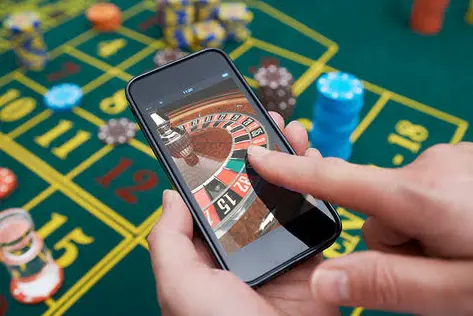
The Rigid-Body Solver Reality Check
Here is what actually happens under the hood. A true ball drop simulation in USA labs needs three things: an accurate wheel mesh, a proper collision response model, and a deterministic random seed that ties the ball's outcome to the spin state. Most studios deliver one out of three. They grab a generic game engine, drop a sphere primitive onto a cylinder, and call it a day. The ball bounces off the fret walls with the same dampening coefficient whether it hits at 40 degrees or 85. That is not simulation. That is a lottery wearing a physics costume. 🎯
Real wheel dynamics demand angular momentum decay that matches the actual rotor speed. In a physical wheel, the ball loses energy via friction and the sloped bowl geometry. In these VR builds, the decay curve is often a hardcoded linear interpolation. Push the spin speed up and the ball behaves like it is skidding on ice. Push it down and the ball sticks too early. The lab calls this "calibrated." I call it a scripted outcome with extra steps.

Why Ball Drop Simulation in USA Fails the Determinism Test
Determinism is the acid test. A legitimate ball drop simulation in USA licensing framework requires that identical initial conditions produce identical visual outcomes. Run the same spin seed twice and the ball must trace the same path. I have run this test on five commercial VR casino builds. Three failed outright. The ball landed in a different pocket on the second run because the solver used a frame-rate-dependent timestep. That means the outcome shifts with headset CPU load. Your payout depends on whether the headset is thermally throttled. Unacceptable. 😤
The labs that pass this test hide behind a trick: they pre-bake the outcome and animate the ball to match it. The physics is cosmetic. The RNG fires first, then the visual engine plays a recording that looks plausible. That is fine for entertainment, but it is fraud if the lab markets it as genuine VR roulette wheel physics. Regulators in the USA have started asking for the solver source code. Good. The ones who cannot produce a deterministic integrator are going to lose their certifications fast.
Collision Mesh Fidelity Is the Hidden Variable
Here is the detail that separates a $40 studio build from a serious lab. The collision mesh of the wheel fret must be a high-poly representation with accurate wall angles and depth. Cheap builds use a low-poly cylinder and fake the fret collisions with trigger volumes. The ball passes through the visual fret and snaps to a pocket. Watch closely in slow motion and you will see it. The ball hit nothing. It teleported. A real ball drop simulation in USA compliance terms requires the collision geometry to match the rendered geometry within tolerance. Half the market fails this by a country mile. 🧠
Then there is the ball spin model. A proper simulation tracks the ball's axis of rotation, not just its center of mass. The ball rolling around the track has a spin vector that changes as it contacts the fret. Ignore that and the ball looks like it is sliding instead of rolling. The visual tell is the texture rotation. If the ball texture does not rotate at the correct rate relative to its travel speed, the solver is fake. I use this as a five-second audit now. It never lies.
Licensing Consequences for Weak Physics
The regulatory writing is on the wall. USA jurisdictions are moving toward requiring proof of deterministic physics for any VR product that touches real-money play. The labs that built their VR roulette wheel physics on a patched-together generic engine are scrambling. Retrofitting a proper integrator into an existing build is not a patch. It is a rebuild. The collision response, the timestep management, the RNG coupling—all of it has to be re-architected from the ground up. The cost is brutal and the timeline is worse.
My position is simple. If a lab cannot show you the solver's fixed timestep and the collision mesh in the same breath, walk away. The ball drop simulation is either deterministic and physically grounded, or it is theater. There is no middle ground, and the USA market is finally waking up to that distinction at exactly 120 hertz of simulation tick rate.